



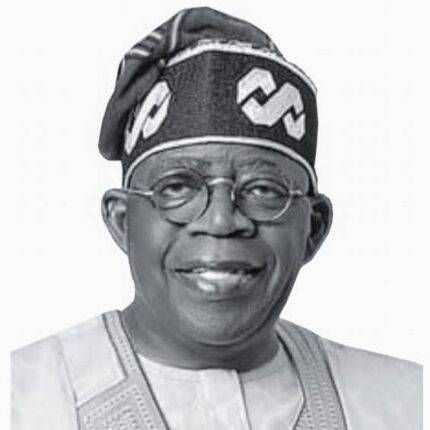
President Bola Ahmed Tinubu has marked the midpoint of his tenure with a bold defense of his administration’s economic and security policies, emphasizing that Nigeria is now on a trajectory of sustainable recovery. In a national address on May 29, 2025, President Tinubu reflected on the country’s condition when he assumed office in 2023, citing the urgency of implementing difficult but necessary reforms.
According to the President Tinubu, the decision to end the long-standing fuel subsidy and unify the nation’s foreign exchange windows were imperative steps to prevent economic collapse. “These policies,” he said, “were no longer sustainable and had become a chokehold on our nation’s neck.” He admitted the reforms caused temporary discomfort for citizens but stressed that without them, the country would have plunged into deeper fiscal turmoil.
President Tinubu noted that the elimination of the fuel subsidy and the reforms in foreign exchange markets have significantly stabilized the economy. The result, he asserted, is a stronger fiscal framework with reduced inflation, a more stable naira, and better long-term prospects for growth. “Today, I proudly affirm that our economic reforms are working,” the president declared.
President Tinubu says Economic Indicators Show Promising Gains
Among the administration’s most touted achievements is the near fivefold increase in Nigeria’s external reserves—from $4 billion in 2023 to over $23 billion by the end of 2024. Tinubu described this as a “milestone that shows renewed investor confidence and prudent fiscal management.” Other metrics point to recovery: the real GDP grew by 3.4% in 2024, with Q4 growth hitting 4.6%—one of the strongest performances in a decade.
President Tinubu also highlighted improvements in revenue generation. In Q1 2025 alone, Nigeria earned over ₦6 trillion. He said the discontinuation of Ways and Means financing and a stronger, more transparent NNPC have helped reduce inflation and improve the country’s debt profile. The nation’s debt service-to-revenue ratio declined from nearly 100% in 2022 to under 40% in 2024, and the fiscal deficit narrowed from 5.4% to 3.0% of GDP.
A major leap in tax-to-GDP ratio from 10% to over 13.5% in one year was attributed to reforms targeting fairness and efficiency. Essential items like food, education, healthcare, public transport, and renewable energy are now exempt from VAT, while high-impact sectors receive transparent tax incentives. The administration also introduced a Tax Ombudsman to protect vulnerable taxpayers and improve accountability in the tax system.
Security Achievements and Renewed Confidence
President Tinubu acknowledged that security is critical to economic and social stability, declaring that his administration has intensified coordination among security agencies and prioritized the welfare of personnel. “We are committed to the security and safety of our people,” he stated, paying tribute to military personnel who “face danger so we can go about our lives freely.”
He reported that several parts of the North-West previously overrun by bandits have seen the return of peace, allowing farmers to resume cultivation and highways to become safer. The President Tinubu resident also noted numerous successful operations that led to the rescue of abducted citizens. Tinubu reiterated his call for vigilance and vowed to continue urging security chiefs to “up their game.”
Under his watch, intelligence-led operations have become more effective. Collaboration between the military, police, and intelligence agencies has yielded tangible results, providing a firmer foundation for national security and creating an environment conducive to investment and development.
Human Capital and Youth Empowerment at the Core
Emphasizing that economic reforms must go hand in hand with human development, President Tinubu spotlighted his administration’s investments in education, healthcare, and youth empowerment. Over 1,000 Primary Health Centres (PHCs) have been revitalized, and 5,500 more are undergoing upgrades. Free dialysis services, subsidized cesarean sections, and expanded health insurance coverage (from 16 million to 20 million Nigerians) are part of the Renewed Hope Health Agenda.
The president Tinubu also stressed educational reforms, including the expansion of infrastructure and the launch of a student loan scheme. In technology and innovation, institutions like NASENI have taken center stage with programs like Innovate Naija and NASCAV—training youth in drone engineering and assembling electric vehicles. These initiatives, Tinubu said, are “restoring dignity to work and opening up a future of possibilities.”
Small and medium-scale enterprises (SMEs) continue to receive support through funding, training, and digital economy incentives. The president said these youth-centered initiatives are central to reducing inequality and placing young Nigerians “at the heart of national development.”
Infrastructure, Agriculture, and the Future of Nigeria
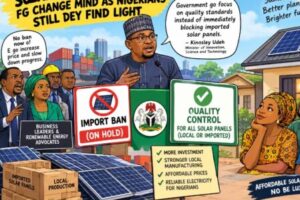
In the area of infrastructure, President Tinubu’s administration has pursued aggressive road construction and energy projects across the country. Key projects include the Abuja-Kaduna-Zaria-Kano Dual Carriageway, Lagos-Calabar Coastal Highway, and the Enugu-Port Harcourt Expressway, among others. The president also revealed that investment in off-grid solar power is helping light up homes, schools, and healthcare centers.
Agriculture and food security remain top priorities. President Tinubu mentioned the distribution of thousands of tractors and farming inputs to boost local production and reduce food import dependence. As a result, he said, prices of staple foods such as rice are beginning to decline.
Looking ahead, President Tinubu reaffirmed his commitment to a more inclusive and prosperous Nigeria. As part of that vision, he announced preparations for the Motherland Festival—a global cultural showcase set to present Nigeria’s heritage and creative industries to the world. “Together, we are creating a system where prosperity is shared, and no one is left behind,” the President Tinubu concluded.
Table of Contents
Discover more from OGM News NG
Subscribe to get the latest posts sent to your email.