








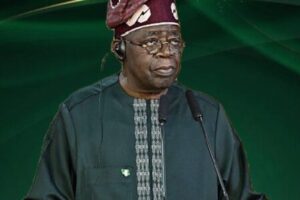
The African Democratic Congress (ADC) in Enugu State has been plunged into internal tension following a public dispute involving former Enugu State Governor, Chief Okwesilieze Nwodo, and the state leadership of the party. The development comes only days after Nwodo reportedly expressed confidence that the ADC would cause major political upheaval in the South-East during the 2027 general elections.
In a swift response, the Enugu State chapter of the ADC issued a strongly worded communiqué declaring that Nwodo is not a card-carrying member of the party. The party leadership further accused unnamed external actors of attempting to hijack and destabilise its internal structures, raising concerns about the integrity of the party’s transition process ahead of 2027.
The communiqué, released after a meeting of the party’s organs in Enugu, reflects growing anxiety within the ADC over alleged parallel activities that threaten its cohesion. It signals the beginning of a potentially prolonged internal struggle, with implications for the party’s credibility and preparedness as an opposition platform in the state.
Dispute Over Membership and Alleged External Interference
At the heart of the crisis is the ADC’s categorical assertion that Chief Okwesilieze Nwodo is neither a registered nor a recognised member of the party in Enugu State. According to the party, investigations revealed that Nwodo has not formally resigned from his previous political affiliation nor completed the required registration process to become an ADC member.
The party alleged that certain individuals, described as non-party actors, have been convening unauthorised meetings in private residences while presenting themselves as ADC leaders. These meetings, the party claimed, were conducted without constitutional backing and were aimed at assuming powers not granted under the ADC framework.
ADC leaders in Enugu further alleged that these activities were being carried out under the influence and supervision of Nwodo. The communiqué described this development as deeply disturbing, warning that such actions undermine party discipline and internal democracy.
By publicly distancing itself from these alleged activities, the ADC leadership sought to draw a clear boundary between legitimate party structures and what it described as external manipulation. The party insisted that political participation within its ranks must follow due process and constitutional provisions.
Zoning Controversy and Breakdown of Internal Consultation
Beyond the question of membership, the communiqué raised serious concerns over alleged illegal zoning, sharing, and allocation of party positions. According to the ADC, these actions were purportedly carried out without the knowledge or consent of the recognised state leadership and coalition partners.
The party disclosed that the two members of the National Working Committee (NWC) from Enugu State—Honourable Barrister Kenneth Okonkwo and Honourable Fidel Ayogu—were neither consulted nor involved in these arrangements. This omission, the party said, directly violated coalition guidelines and internal decision-making processes.
Particularly contentious was the situation in the Enugu East Senatorial Zone, where the ADC alleged that zoning and sharing of positions occurred without the knowledge or consent of the recognised leader of the party and coalition in the zone, Distinguished Senator Gilbert Nnaji. The party described this as unacceptable and indicative of a deliberate attempt to sideline established leadership.
The ADC also expressed alarm that the Enugu State Chairman of the party was completely unaware of these purported arrangements. According to the communiqué, such disregard for party hierarchy and constituted authority cannot be tolerated within a disciplined political organisation.
ADC’s Response, Principles, and Call for National Intervention
In response to the unfolding crisis, the ADC Enugu State Chapter formally declared all zoning, sharing, restructuring, or leadership arrangements carried out outside its transition guidelines as null, void, and of no effect. The party emphasised that decisions affecting its structure cannot be made in the absence of recognised leaders and organs.
The leadership further rejected any engagement with individuals who have failed to formally resign from other political parties and properly register as ADC members. It also distanced the party from any attempt to use the ADC as a proxy for advancing the interests of the APC-led government in Enugu State.
Reaffirming its ideological foundation, the African Democratic Congress stated that the party is built on discipline, internal democracy, rule of law, and collective leadership. It warned against clandestine meetings, political ambushes, and external manipulation, declaring unequivocally that the party “is not for sale and will not be hijacked.”
Consequently, the Enugu ADC called on the national leadership of the party to urgently intervene, enforce strict compliance with the party constitution and coalition guidelines, and safeguard the integrity of the organisation. The party concluded by reaffirming its unity and commitment to building a credible, people-oriented opposition that reflects the democratic aspirations of the people of Enugu State ahead of 2027.
Table of Contents
Discover more from OGM News NG
Subscribe to get the latest posts sent to your email.